 Saswata



Walking the tightrope between keeping your team productive and not breathing down their necks is a challenge. You need results – calls answered, issues resolved, customers satisfied – but micromanagement can drive your best people away and even hurt the productivity you’re trying to improve. So how can you approach productivity tracking for call center agent performance without crossing into micromanagement? It comes down to balancing oversight with trust.
If you’ve ever felt tempted to monitor every move an agent makes, consider this.
Excessive control is so common that 79% of employees have experienced it, and 69% have thought about quitting because of it. Micromanagement might come from good intentions, but it often backfires. Agents who feel constantly watched tend to act busy just to avoid criticism, without actually being more productive.
In a call center, this overbearing approach can slow everything down. Agents focus more on avoiding mistakes than on helping customers, leading to longer handle times, frustrated callers, and declining service quality. Micromanagement ultimately undermines your call center management goals by creating a toxic environment that breeds mistrust and high turnover.
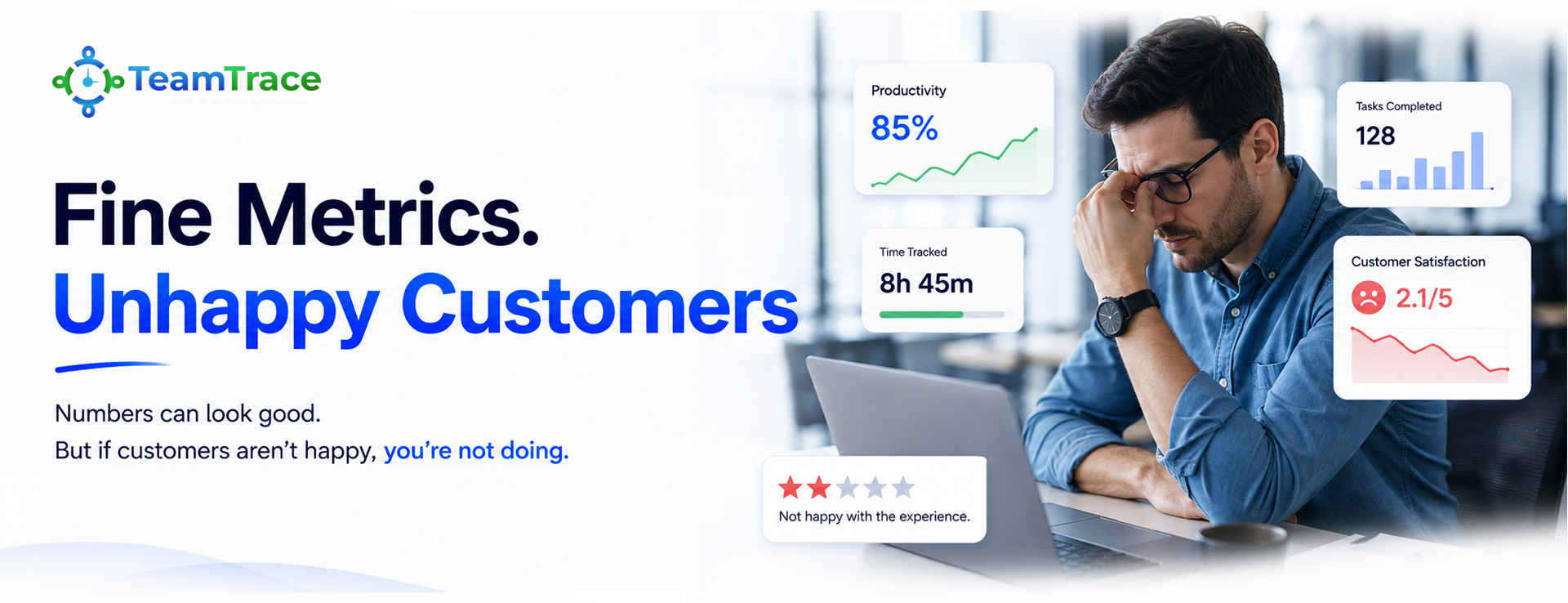
The first step to successful productivity tracking for call center agent workflows (without micromanaging) is choosing what you measure. Old-school managers might fixate on hours worked or the number of calls taken, but more hours or calls don’t automatically equal better service. Instead of tallying only outputs, track outcome-focused productivity tracking metrics that truly reflect performance.
For example, rather than obsessing over Average Handle Time (AHT), balance it with First Call Resolution (FCR) and Customer Satisfaction (CSAT). This way, agents focus on solving customer problems, not just rushing them off the phone to hit a time target.
Also, stick to metrics within an agent’s control and avoid those that inadvertently encourage corner-cutting. If you measure only calls per hour, agents might cherry-pick easy inquiries or shorten conversations to boost their stats. Instead, define a well-rounded set of KPIs, such as resolution rates, quality assurance scores, or sales conversion rates, that give a balanced view of productivity. When your team clearly understands what success looks like (and sees it’s about quality, not just quantity), they’re motivated to hit those targets without feeling policed. Even better, involve team members in defining these KPIs. Having a say makes them more likely to buy in and excel.
Technology can be your best ally in productivity tracking for call center agent performance, if you use it right. Modern call center productivity tools automatically collect and display key data in real time, giving you a clear view of performance without constant check-ins. Dashboards can show calls handled, average response times, FCR rates, and customer feedback. With these insights gathered automatically, you can spot trends and address issues early, so no shoulder-surfing is required.
The right tools find a balance between insight and intrusion. Steer clear of systems that feel like they’re built to spy on agents. Remember, a good tool should help employees improve, not just help you watch them. The best platforms provide useful data, such as BPO time tracking logs and activity reports, while still respecting privacy. A workforce management system can automatically track logins, breaks, and call handling times. If the data shows an agent is lagging behind, you can offer help proactively rather than breathing down their neck.
Use tools (such as TeamTrace) that empower you with actionable insights and empower agents by making expectations clear. Some solutions even let agents see their own productivity stats, a smart way to encourage self-improvement through transparency.
An effective call center strategy for productivity begins with setting clear expectations, then giving agents the freedom to meet them.
Start by establishing concrete and attainable goals for each agent or team. For example, a target CSAT score or a daily resolved-ticket count. Make sure these goals tie into broader business outcomes (like customer retention or sales growth), so everyone sees how their work contributes.
Once goals are set, step back and let your people do what they do best. Micromanagers try to control every step, whereas great leaders set the vision and trust their team to deliver. Replace constant check-ups with periodic coaching sessions focused on support and development. For instance, hold a weekly one-on-one to review an agent’s metrics and discuss any roadblocks. Use that time to provide feedback and guidance, not to nitpick minor issues. When agents know these check-ins are about growth (not punishment), they’ll be honest about obstacles and more open to coaching.
Additionally, encourage autonomy in daily tasks. If an agent finds a creative way to improve results, recognize and share it with the team. This positive reinforcement builds a culture where people feel confident taking initiative to boost performance. Over time, trust and accountability replace fear and compliance, and your agents become proactive problem-solvers who take ownership.
Ultimately, productivity tracking for call center agents should feel like a team effort, not a clampdown. Be transparent about why each metric matters and how it links to customer success. When you frame tracking as a way to celebrate wins and pinpoint coaching opportunities, it stops feeling like a witch hunt. Instead of a “gotcha” exercise, the data becomes a shared resource everyone can use to improve. This mindset shift defines a modern and healthier approach to call center performance management, moving from a culture of scrutiny to a culture of ownership.
With the right productivity tracking for call center agent approach, tracking key metrics, leveraging supportive technology, and fostering a trust-driven culture, you can keep your call center efficient without becoming a micromanager. You’ll have the visibility you need, and your agents will have the freedom to excel. In the end, effective call center management is about guidance, not control.
Shift your focus from watching every minute to measuring meaningful outcomes. Set clear goals for your team and track key results (like issues resolved and customer feedback) instead of hovering over each call. This direct approach makes agents feel trusted and empowered, and you’ll see productivity climb.
Focus on outcome-driven metrics that reflect quality and results. For example, track customer satisfaction (CSAT) and first-call resolution (FCR) rates instead of fixating solely on call counts or average handle time. These metrics provide a clear performance picture and align with effective call center performance management, letting you guide your team by results without scrutinizing every second.
Leverage modern software (like TeamTrace) that automatically monitors your agents’ work so you can lead by insight. The best systems (including BPO time tracking tools for outsourced teams) provide real-time dashboards for key metrics, allowing you to spot trends and support your team without constant check-ins. By relying on these tools, you identify coaching opportunities and recognize wins at a glance, keeping trust high and avoiding the need to hover over agents.
Adopt a leadership approach that emphasizes trust, clear goals, and agent empowerment. Set a focused call center strategy with well-defined performance targets and give your team the training and tools to reach them autonomously. By trusting your agents and coaching them rather than controlling every detail, you’ll foster a confident, proactive workforce. This management style drives high productivity and morale because your agents stay motivated and accountable.