 Saswata


Here’s an uncomfortable question for any manager reading this. If I asked you exactly where your team’s hours went last week, could you answer?
The truth is that most managers can’t, and that single blind spot is the quiet reason good teams burn out and miss their deadlines.
Worse, it compounds! Every wrong guess quietly costs you another late night, another slipped deadline, and another good person wondering if it’s time to leave.
Now your team probably isn’t slow, and it certainly isn’t lazy, but your team is flying blind, and so are you. The problem was never effort. The problem is visibility. You can’t fix what you can’t see, and right now most managers are simply guessing.
The good news is that you don’t need longer hours to fix this. You need a clearer picture. The right employee productivity monitoring software hands you that picture, and the six steps below turn it into real, repeatable results, without anyone clocking a single minute of overtime.
Productivity is all about getting more value from the same hours.
When a team runs well, deadlines are met and people go home without dread. When it doesn’t, the costs pile up quietly with missed launches, blown budgets, and your best performers burning out first.
Strong productivity directly helps you improve project delivery, and it protects employee engagement, because nothing drains a good employee faster than working hard on the wrong things.
You don’t need a massive overhaul, but just a handful of focused changes that compound. Here are the six steps that you should consider to reclaim your team’s time.
Pull the real numbers, and most managers are stunned. On a typical team, deep work claims around 42% of the week, meetings swallow 21%, admin grinds through 16%, and a quiet 9% vanishes into pure distraction. The biggest silent thieves are usually emails at 15.6%, chat and messaging at 9.8%, and the endless scroll of news and social media at 7.4%.
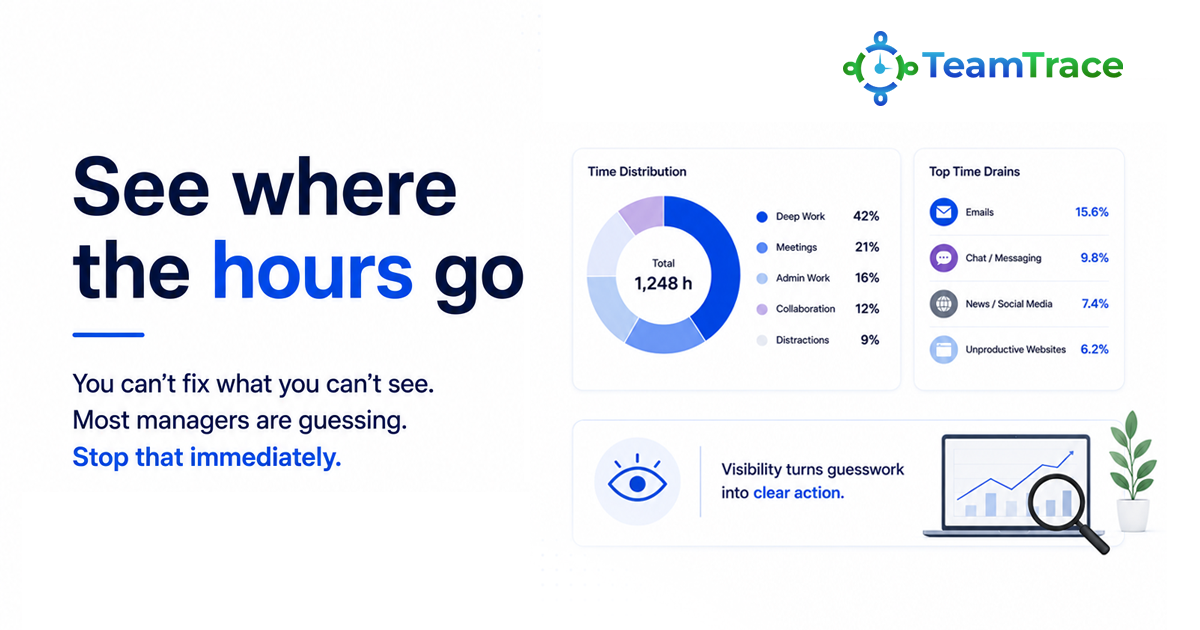
You were never wrong about the symptoms. You were just guessing the cause. Modern employee work and time tracking replaces any guesswork with hard data, so you can start managing on facts.
Look at your calendar, then ask an honest question. How many of those calls could have been a two-line message?
The average team bleeds nine hours a week on meetings that decide nothing. Now that’s an expensive habit, wearing a productive costume. Multiply those nine hours across a full year, and you’ve quietly handed away entire weeks of output to conversations nobody even remembers.
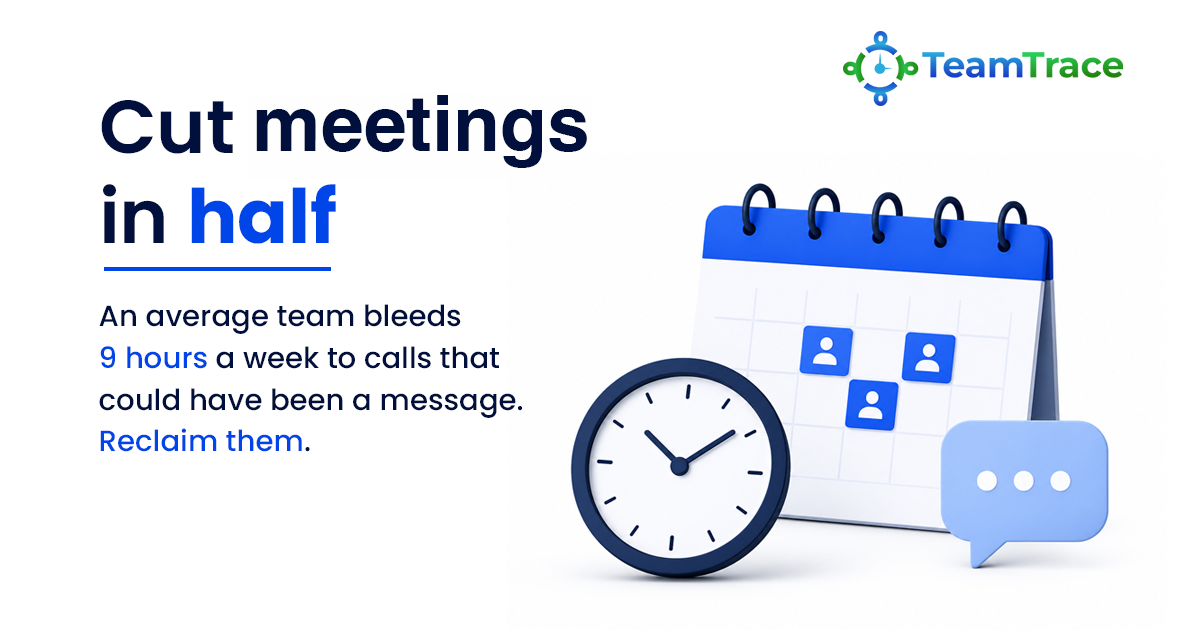
Once you reclaim those hours, you instantly reduce idle time without asking a single person to work harder. Keep the meetings that actually decide things. Kill the ones that merely “sync.” Default to async updates, guard the calendar fiercely, and watch a full working day reappear every single week.
Every team has exactly one constraint slowing everything else down, and it’s almost never the person you suspect.
The loudest complainer is rarely the problem. The quiet stage in your workflow usually is. Map your cycle time by stage, and the truth jumps right off the screen — work might race through intake, planning, and design, then sit dead in “Review” for fifteen days while everything downstream waits.
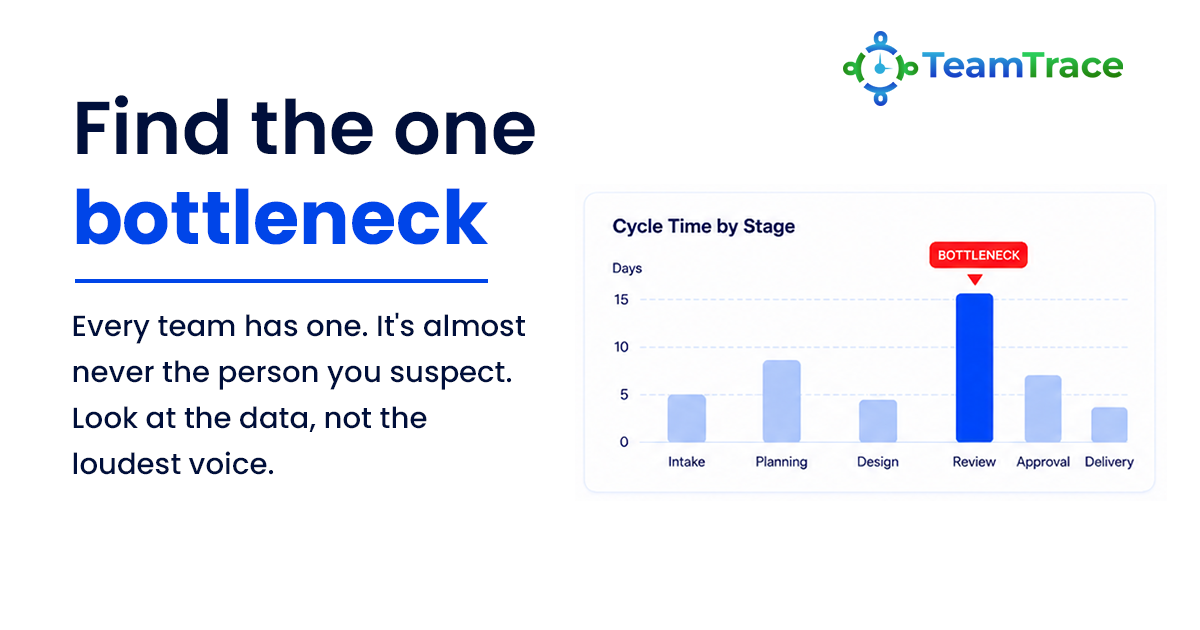
That’s the kind of insight a proper employee performance measuring tool surfaces in minutes instead of months. Fix that one stage, and you don’t just speed up a single task but improve project delivery across the entire board, because the whole pipeline finally moves at the same pace. So, look at the data, not the loudest voice in the room.
Two uninterrupted hours beat eight fragmented ones every time.
Every ping, every “quick question,” and every notification doesn’t simply steal a minute. It shatters the focus that makes meaningful work possible. Fragmented hours feel busy and produce almost nothing of value.
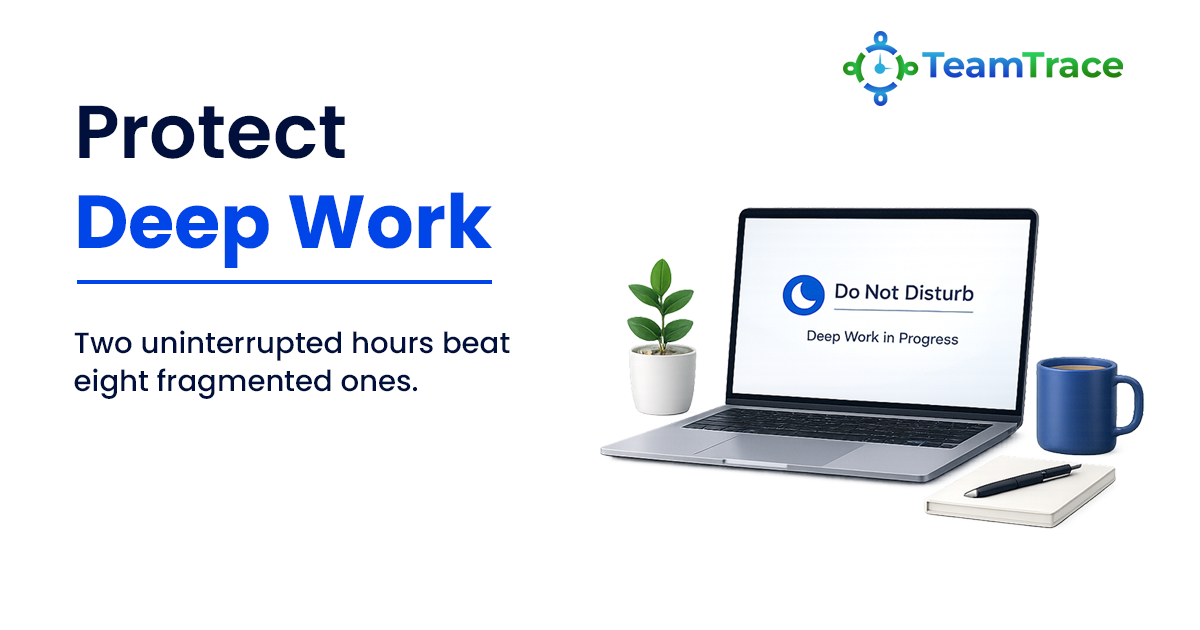
So, build deep work into the day on purpose, then defend it like it matters. Block focus windows, mute the noise, and switch on “Do Not Disturb”. Protecting concentration is one of the fastest ways to reduce idle time hiding inside a so-called “busy” day, where people are technically working but constantly being yanked off-task before they ever hit their stride.
When you put the right person on the right work, strengths compound & momentum builds on its own. Put the wrong person in that seat, and even genuinely talented people grind, friction piles up, and output drains away. Mismatches slow projects down, quietly crush morale, and burn out your most capable people first.
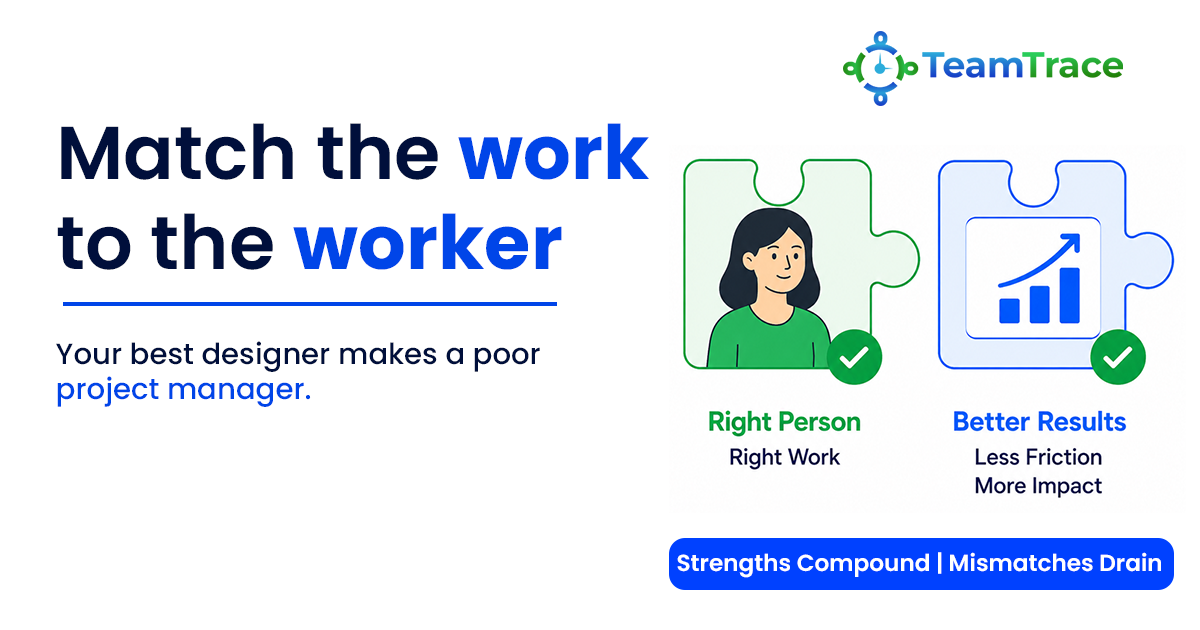
This is where data beats gut feeling once again. An employee performance measuring tool shows you who actually thrives at what, so you can assign work for impact instead of mere availability. The payoff runs deeper than speed. Aligned work fuels real employee engagement because people do their best & feel their best when the work genuinely fits them.
What gets reviewed gets done.
Productivity isn’t a one-time project you “finish” and forget. It’s a habit you keep. The teams that stay sharp are the ones who look at the numbers every week and make one small, deliberate adjustment. One fix a week becomes fifty fixes a year & that quiet compounding is exactly what separates teams that plateau from teams that pull away.
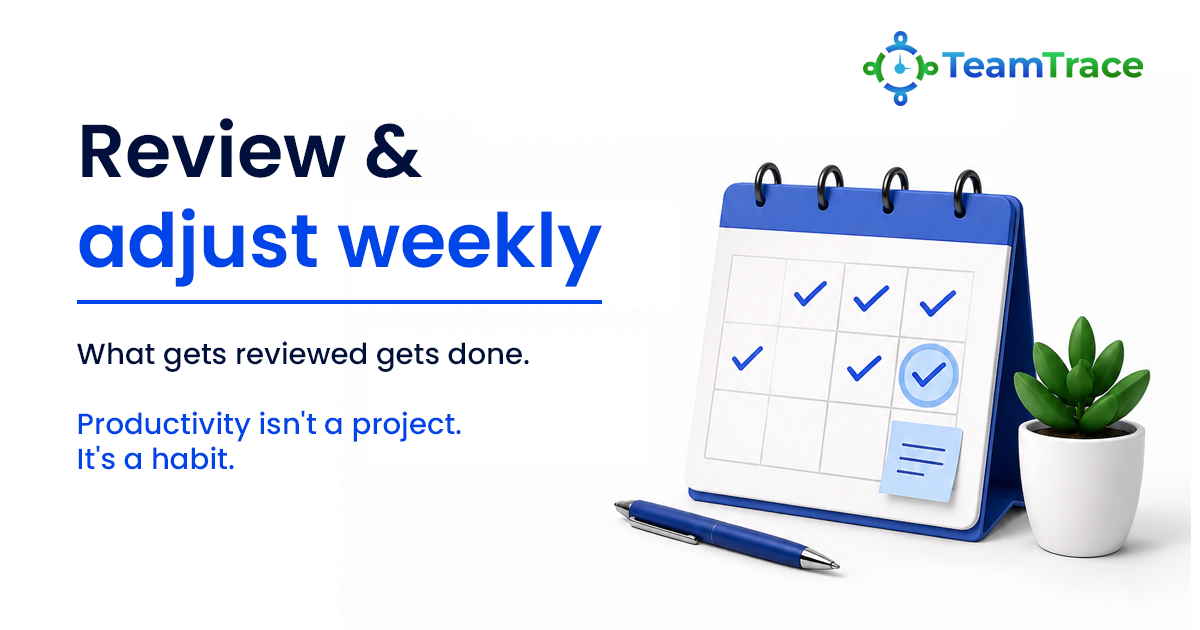
A short weekly review, powered by clear data, is how you improve productivity with workforce management software instead of quietly sliding back into old patterns. Check what shifted, spot the new bottleneck, make the tweak, and then repeat. Small, consistent corrections will always beat heroic, occasional overhauls.
You can’t improve what you don’t measure, and “looks busy” was never a real metric. Useful measurement starts with seeing how time is actually spent, then tracking whether output is rising against it.
Start with employee work and time tracking to capture where the hours go. Then layer in outcome measures such as tasks completed, cycle time per stage, on-time delivery rate, and rework. Together, these turn vague impressions into clear and actionable trends.
A good employee performance measuring tool ties effort to results, so you can see who’s thriving, where work stalls, and which changes actually moved the needle. The goal is to have clarity. The right employee productivity monitoring software gives every manager that clarity without chasing anyone for status updates.
Most teams already want to be productive. What stops them is the same handful of recurring obstacles.
Left unchecked, these drag down both output and employee engagement. Now the fix is getting clear visibility first, then making small, targeted corrections, exactly what the six steps above are built to do.
Every step in this guide depends on actually seeing where your team’s time goes. That’s exactly what TeamTrace is built for.
It gives you a clear, real-time picture of how hours are spent, so you stop guessing & start deciding with data. It shows you where time is wasted & surfaces the one bottleneck slowing delivery down. Since it ties time to outcomes, it also works as a simple employee performance measuring tool, helping you put the right people on the right work and reduce idle time without micromanaging anyone.
The result is the whole promise of this guide in one place: sharper focus, faster delivery, and stronger employee engagement with no overtime required.
You don’t need longer hours but need a clearer picture.
TeamTrace shows you exactly where your team’s time goes, and where it should.