 Saswata



In the last few years, remote work has completely redefined where people build their dreams. Today, an entire world of remote business ideas and work from home business opportunities is open to anyone having a laptop, a good internet connection, and the drive to start something of their own.
Nearly 50% of U.S. entrepreneurs launch businesses right from their home, drawn by the setup speed, flexible hours, and lower costs that comes with running a business from your own space.
Most of these ventures begin as small sparks (simple ideas born at a kitchen table or home office), that eventually grow into thriving businesses.
In this guide, we’ll break down everything you need to know before you take the leap. We’ll also dive into the top ten powerful remote business ideas with their pros, cons, and earning potential, to help you find the one that fits you best.
Running a business from home isn’t just convenient but also smart.
In today’s digital-first world, remote operations are powerfully effective. For organizations, it’s a proven way to cut costs, hire top talent, and boost productivity. For individuals, it means saving hours on commuting, avoiding relocation costs, and enjoying a higher quality of life.
And the most amazing thing is, 90% of companies have now embraced some form of hybrid or remote work. That’s a complete shift in how business is done. The old stigma around “working from home” is gone. Entrepreneurs today can confidently build fully online ventures that compete on a global scale.
Speaking of global, that’s the next big advantage. Remote business owners can navigate through worldwide markets & talent pools with ease. With the right set of tools, even a solo founder can hire specialized contractors or serve clients across continents from anywhere in the world. Many business leaders mention that remote operations not only close skill gaps but also improve team diversity.
The financial upside is equally impressive. Companies that go fully remote often save $20,000–$37,000 per employee per year on expenses like office space and utilities. And performance? It climbs. Studies show that employees working remotely are 35–40% more productive, with over two-thirds of employers confirming measurable gains. And, for an entrepreneur, that means doing more with less & operating lean while achieving high output.
And then comes freedom, which feels like a personal win. Running a remote business gives you control over your schedule, environment, and pace.
93% of professionals say remote work has improved their mental health by reducing stress & burnout.
Over 20% of businesses fail in their first year, while only about half make it past five. The difference between those that survive & those that don’t? Preparation. So, before you dive in, make sure these things are covered:
Before anything else, ask yourself these questions: Are you ready to run a company? Do you have the skills and mindset it takes?
With the help of Entrepreneur Readiness Quiz, you can measure your preparedness. Then, validate your ideas, do market research, get to know your audience, understand your competitors, and finally see whether the industry is growing or becoming small. You’ll have fewer surprises later on if you have more clarity now.
When it comes to remote business ideas, this early validation is what separates an exciting concept from a profitable one.
Your business plan is your roadmap that should clearly define your model, target market, marketing strategies, and financial condition. Jot them down so that you can answer the hard questions: How will you make money? What is your growth path?
Even if you’re starting alone, plan your goals, budget, and next steps, because what gets written gets done.
If this is your first time running a business, take advantage of low-cost or free training platforms or connect with a mentor on networking websites.
These programs can teach you the fundamentals of running a business (accounting, marketing, operations) and give you confidence. Mentors often help refine remote business ideas into actionable strategies.
Even home-based business owner need to stay compliant. Choose a business name & pick your structure (sole proprietorship, LLC, or corporation). Register it officially & secure any required permits or license.
Don’t forget your EIN (Employer Identification Number) for taxes, plus insurance or tax accounts where needed. Handling these now prevents future headaches and makes your business legitimate from day one.
Money fuels momentum. Figure out how much investment you’ll need to launch & keep things running until profits start rolling in. List your startup costs which typically includes website, tools, marketing, and equipment.
Decide if you’ll fund it on your own or need a small loan. Open a separate business bank account & get yourself a credit card to keep your finances clean. Also, set a realistic income goal so you know what success looks like for you.
This financial clarity applies to all remote business ideas, whether you’re freelancing or starting an e-commerce brand.
Your workspace shapes your workflow. Keep a specific area for work that’s quiet, comfortable, has good lighting, and has a strong connection to the internet.
Get the right gear such as a dedicated laptop, a high-quality headset, and an all-in-one scanner/printer (if required). Get access to the required digital tools (Microsoft 365 or Google Workspace), a professional business email, & a reliable phone line.
Once you have checked off these essentials, you’ve built a foundation for survival & success. Also remember that preparation alone doesn’t guarantee profits. But it dramatically increases your odds in a world where so many startups don’t make it.
The more you prepare now, the smoother, smarter, and more secure your remote business launch will be.
If you’ve done the prep work, you’re already ahead of the game. But here’s where the real payoff begins — the advantages that make running a remote or online business so powerful.
When you run your business from home or anywhere, your costs shrink fast. There is no need for you to put money in office rent, utility bills, or daily commute. Studies show that companies save thousands of dollars per employee per year by operating remotely.
For a solo business owner, this means you get to run lean, cut down on unnecessary expenses, and enjoy good profit margins from day one. Many of the most successful remote business ideas thrive because of this lean model.
Without the fatigue of daily commutes or the distractions of a traditional office, your focus & output naturally rise.
Data says that employees working remotely are 35–40% more productive, and two-thirds of the employers have observed measurable productivity gains among their teams that work remotely.
For your remote business, that translates to faster project delivery, happier clients, and the ability to do more, even when you are running the show solo.
A remote business has no borders. You can hire freelancers/contractors, partner with experts, or sell to customers worldwide.
HR leaders confirm that remote work helps companies “recruit and retain the best people, fill skills gaps, and increase diversity”. For an entrepreneur, this global access means you can collaborate with the best talent or work with international clients, all without the cost or complexity of opening from a physical office.
And that’s the beauty of remote business ideas. They scale globally from day one.
Running an online business gives you freedom and control over your time. You get to decide where, when, and how you work.
That freedom pays off. In a survey, it was observed that 93% of professionals said working from home decreases mental stress in employees. Since you’re not hooked to a desk anymore, you can take breaks when you need them, workout, or even run your business from the mountains.
Here’s something most entrepreneurs overlook: remote businesses are naturally disaster-proof.
When bad weather hits, travel shuts down, or public health emergencies arise physical businesses pause. But online businesses? They keep moving.
Now that flexibility doesn’t just protect your financial condition but also makes scaling a lot easier. You can add new products, work with more clients, or pivot entirely, without the need to relocate or expand into a physical space.
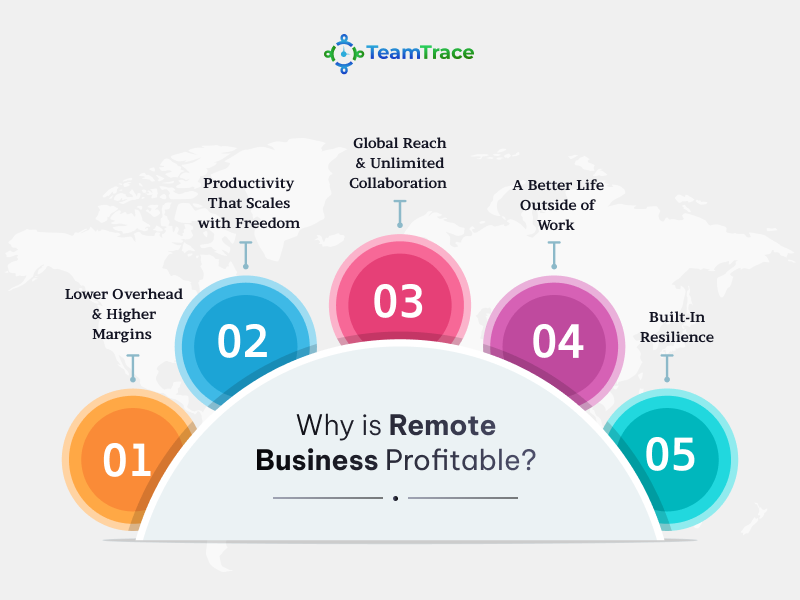
In short, remote business ideas aren’t just a trend but a smarter & more sustainable way to build & grow. You save money, work efficiently, make connections globally, and live a better life.
That’s why more new business owners than ever are choosing to build their futures online.
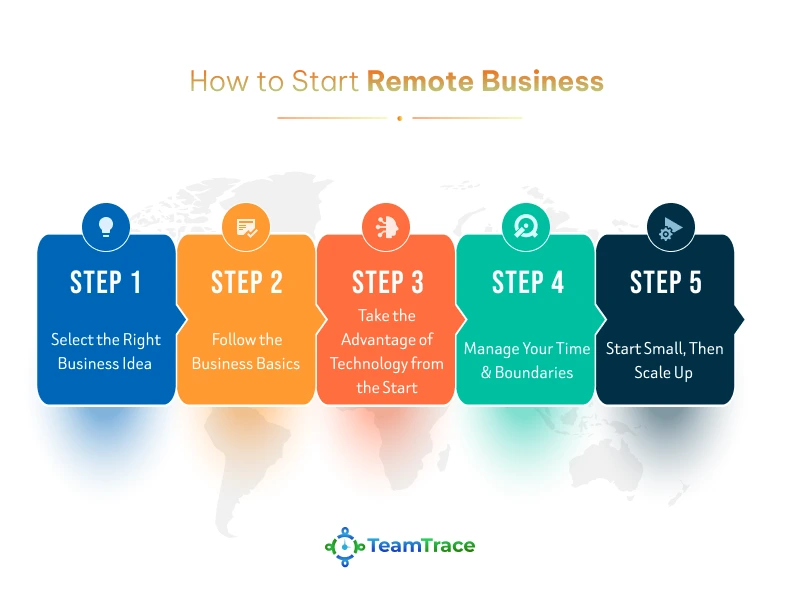
So, you’ve made the decision & now you’re ready to launch your home-based business. But the question that still remains unanswered is how to do it right. Because success still comes down to strategy, structure, & self-discipline.
Here’s your step-by-step playbook.
Start with something that fits a home-based model.
Look at your skills, passions, & experiences. Ask yourself: What do I already know how to do that people would pay for?
You might freelance in a skill you already have a knack of, offer consulting or VA services, or sell drop-shipped or handmade products through e-commerce platforms. The options are endless but remember that it’s demand that will grow your business. Validate your idea early, talk to potential leads, study market forecast, & make sure people want what you plan to offer.
Need inspiration? Jump ahead to the section on Remote Business Ideas — several are perfect for first-time founders.
Just because you’re doing WFH doesn’t mean you should skip the basics. Treat your home business as a real business from the first day. That means writing a solid business roadmap, registering your company name, and setting up bookkeeping.
Successful entrepreneurs plan everything.
Establish a schedule, too. Without a proper schedule, home distractions can derail your focus fast. Set working hours (for example, 9 a.m. to 5 p.m.) and stick to them. No TV, laundry, or any other work during that time. Ask yourself tough questions like, “Can you stay motivated without supervision?” Because discipline is what separates hobbyists from professionals who tend to grow their business.
Your tech stack is your team, especially when you’re running solo.
Use project management software like TeamTrace or Trello to keep your workload organized & track deadlines. Communicate with your clients using Zoom or Slack. These platforms make even a one-person company look and run like a fully staffed organization.
And don’t wait to go online. Create a basic website or a business page on social media. The sooner people can locate & trust you online, the faster your brand will scale.
These same digital tools form the backbone of many profitable remote business ideas, and don’t forget to layer in remote work monitoring tools for accountability.
Working from home blurs lines fast. You need guardrails.
Set up a workspace that will be dedicated to only your work such as a room, corner, or anywhere that signals, “This is where I work.” When your workday ends, shut the door, log out, and be done.
Communicate your hours clearly to friends & family, so they respect your boundaries. Use reminders, calendars, or even productivity tools like TeamTrace to track your time and attendance.
If accountability is tough, add structure. You can use a remote work monitoring or productivity app, not to spy on yourself, but to stay consistent. Because when you’re your own boss, self-management is everything.
Big businesses often start small, and smart entrepreneurs test before they go all in.
Start off with one client project while keeping your day job. Launch an online store with a limited product range to gauge interest in potential customers. Gather feedback from them and then refine your offer.
Once you start making some sales, scale. Reach out to more clients and work for them, then expand your services, and finally add new product lines.
And don’t hesitate to delegate EVER. Hire freelancers/contractors through outsourcing platforms for tasks that are time-consuming or require special attention. Free yourself up to focus on what drives growth in your business.
And that’s how small beginnings turn into sustainable and fully remote businesses.
Every new business owner’s path looks different. But the formula for success remains the same. This includes choosing the right idea, setting yourself up professionally, and harnessing the power of digital tools.
Do that, and you’ll build a home business that lasts.
Now let’s move from theory to opportunity.
Below are ten proven remote business ideas that you can run entirely from your home. Each comes with a clear look at the upsides, the trade-offs, and what you can actually earn once you get the ball rolling.
If you can write, there’s a business waiting for you.
With almost zero business costs, freelance writing remains one of the best and most popular remote business ideas today. You can specialize in blogs, copywriting, or even technical documentation.
Every busy entrepreneur or executive eventually reaches the same point — too many tasks and too little time.
That’s where a skilled Virtual Assistant steps in. If you’re organized, reliable, and tech-savvy, you can manage inboxes, calendars, research, or even bookkeeping, all from your home office. This is one of those remote business ideas that scales beautifully.
A digital store never closes.
Whether you run a dropshipping store globally or sell handmade goods on Etsy, e-commerce remains one of the most lucrative remote business ideas that can scale without the costs of a physical shop. With the right niche & marketing, your products can reach customers 24×7 all over the world.
If you’re skilled in a subject, there’s always someone who wants to learn it online.
Video conferencing platforms like Zoom have made tutoring easy, scalable, & there is no need to be dependent on any specific location. It’s rewarding, flexible, & entirely built on your expertise.
Every company needs developers.
If you can build websites, apps, or full-scale software platforms, then coding remains one of the highest paying remote business ideas & the most flexible remote profession available in today’s market.
If you have a creative eye, digital design is one of the most creative remote business ideas to explore.
From logos & brand visuals to motion graphics & UI/UX design, businesses everywhere require strong creative output.
Brands live & die by their online visibility, but you can now help them grow.
If you have the proper knowledge of how social platforms, SEO, or paid advertising works, you can manage accounts, create campaigns, and deliver impactful growth from anywhere. This is among the fastest-growing remote business ideas, ideal for creative professionals who enjoy content, engagement, and analytics.
If you know how to build an audience, you can build an income stream.
Running a YouTube channel, blogging, or even podcasting can turn your insights into ad revenue, sponsorships, or affiliate commissions. It’s one of the most scalable remote business ideas, though it rewards consistency over speed.
If you’ve mastered something (business, fitness, career strategy, leadership), coaching/consulting is one of the most profitable remote business ideas.
When it comes to consulting, you will be paid for your accountability and insights, not just your time. It’s a good business venture with solid income potential & minimal setup costs.
It is common to every business owner that businesses everywhere require reliable and remote talent and if you have the skills, you can be the bridge.
You can connect companies with skilled contractors/freelancers and run a full-fledged recruitment or outsourcing agency right from your laptop.
Each of these business models can start lean and scale big. In fact, many successful remote business owners begin with one idea, master it, and then layer in a second- or third-income stream.
Running a remote business isn’t just about having the right mindset. Rather, it’s about building the right infrastructure.
Your tools are your office, your assistant, and your growth engine all rolled into one. Here’s the modern toolkit every entrepreneur should have in their corner, the ones that keep your operation running like a well-oiled digital machine.
Every remote business owner requires a system to track deadlines, deliverables, and who’s assigned to which task. That’s where tools like TeamTrace, Trello, Asana, Basecame, and Jira come in.
These tools let you organize your projects visually and assign the concerned members with the tasks. You can even monitor progress without the need for endless email chains. A recent study has shown that 82% of companies now rely on PM software to collaborate and drive efficiency among employees. And for solo entrepreneurs, it’s like having a digital COO who keeps you structured, moving forward, and accountable.
Most of the above-mentioned tools offer affordable starter plans or free tiers, so there’s no reason not to build muscle early in your business.
Every remote business requires tools to keep conversations flowing and team connected, because without an office, communication is your culture.
For daily updates, Slack is your watercooler. If you want to have virtual meetings, Microsoft Teams or Zoom is your go-to tool. And for real-time collaboration, Microsoft 365 or Google Workspace allows teams to co-edit documents, presentations, and spreadsheets from anywhere. File-sharing platforms like Dropbox or OneDrive keep everything synced and secure.
Pro tip: Set up regular standups (daily Slack huddle or weekly Zoom check-ins) to keep energy & alignment high.
It is true that remote work runs on trust, but to validate that trust, you need data. That’s where attendance and time-tracking tools like TeamTrace, Harvest, or Clockify come in handy.
These tools help you log work hours, analyze where your effort truly goes, and track billable time. If you are manging a team of freelancers or people who are working remotely, advanced options like TeamTrace, TimeDoctor, or Hubstaff can also capture screenshots or activity levels for accountability.
However, if you’re already using TeamTrace, you already have built-in automated time tracking.
So, once your business is online, you need to have robust security protocols.
Start with a robust anti-malware solution or antivirus, then layer in a VPN for safe browsing (especially on public Wi-Fi). If your daily work involves handling sensitive data or you work with remote teams, consider tools like TeamTrace for Insider Threat Management and data loss prevention.
And of course, don’t forget automatic cloud backups using tools like OneDrive or Google Drive. You also need to manage your passwords securely with LastPass or 1Password, because losing data or getting hacked can erase months and even years of progress.
You don’t need to do everything yourself. Rather, you just need the right people at the right time. That’s where well-known global freelance platforms like Upwork, Freelancer.com, Fiverr, and PeoplePerHour shine.
You can find & hire the right talent for virtually any task. The platforms handle contracts, payments, and reviews, making global hiring efficient and safe.
The smart approach would be to start with small test projects, gain trust, and then expand. If you are outsourcing strategically, you can scale like a big business, without committing to full-time payroll.

Depending on your business model, you may also need a few specialized tools like:
Now, if you prefer fewer moving parts, platforms like TeamTrace bring together multiple functions into one clean and integrated ecosystem.
Experiment, refine, & find the combination of tools that fits how you work best. Once your digital infrastructure is set up, your operations will become smooth, your team becomes fast, and your growth becomes predictable.
Running a business from the comfort of your home is the new normal. If you have a solid plan, the right mindset, and use digital tools smartly, you can build a company that thrives.
Throughout this blog, we have come across why remote business is on the rise. We’ve also walked you through how to set up your home-based business. With the right set of tools and ten practical business ideas to get started, we believe that you would be good to go.
As an entrepreneur, you might be aware of the fact that success won’t happen overnight. You need PM tools to stay organized, communication tools to stay connected, and productivity platforms like TeamTrace to keep operations running smoothly. And keep in mind that remote entrepreneurship is as much about discipline as it is about freedom. Once you balance those well, you’ll find your rhythm.
So,test your idea, learn as you go, and refine your approach. Every big success story starts small & yours could be next.
Your home-based business future starts now.
A remote business is any venture which you can run primarily online, without the need of any physical office or storefront. You can work from the comfort of your home, a coworking space, or anywhere that has a good internet connection.
The biggest difference from a traditional setup is location — your “office” is virtual. However, remember that the business fundamentals remain exactly the same. You still need to register your company, manage taxes, and provide services to your customers. The flexibility comes from replacing physical operations with digital tools that let you run things efficiently from anywhere in the world.
Yes! Even if you’re running things from your home, your business still needs to be genuine and trustworthy. You’ll likely need to:
Register your business name with your local or national authorities.
Choose a business structure (like sole proprietorship, partnership, or LLC).
Apply for any industry-specific licenses or permits.
Check out local zoning rules. Most areas allow online businesses, but it’s still good to confirm.
You’ll also want to separate your personal & business finances for easier tax filing. A smart move would be to getting an EIN (Employer Identification Number).
With clear communication, trust, and the right tools, you can lead any remote team successfully.
Start off by setting clear goals & expectations. Everyone should be aware of what success looks like. Schedule regular standups to stay aligned.
And when it comes to accountability, use digital tools to track performance and progress. Platforms like TeamTrace make this pretty easy since it offers real-time visibility into working hours, task progress, and productivity levels. It even generates the required reports and captures screenshots, so you always know where your projects stand.
Just remember to focus on outcomes, not screen time. If your team is hitting deadlines & delivering top-notch work, they’re being productive & it should be the only thing that really
Initiating a remote business idea is one of the most affordable ways to become a successful business owner. You can cut down on big expenses like utilities or rent. Instead, your main costs are likely to include the following:
A reliable computer and internet connection (which you probably already have).
Domain & website setup – around $50–$100 if you do it yourself.
Licensing fees or business registration, depending on your location.
Marketing costs – small budgets for ads, social media, or freelance listings.
If your business needs specific tools such as design software or a good microphone for podcasting, consider them.
As you grow, you can reinvest profits into tools like TeamTrace, other PM platforms, or marketing campaigns.